Belcourt Theatre Nashville, TN
Suzana Herculano-Houzel
Associate Professor, Department of Psychology and Vanderbilt Brain Institute, Vanderbilt University; Author of The Human Advantage, MIT Press (2016); Editor-in-Chief, The Journal of Comparative Neurology
Planet of the Apes— What, If Anything, is Really Special About the Human Brain?
Program Description
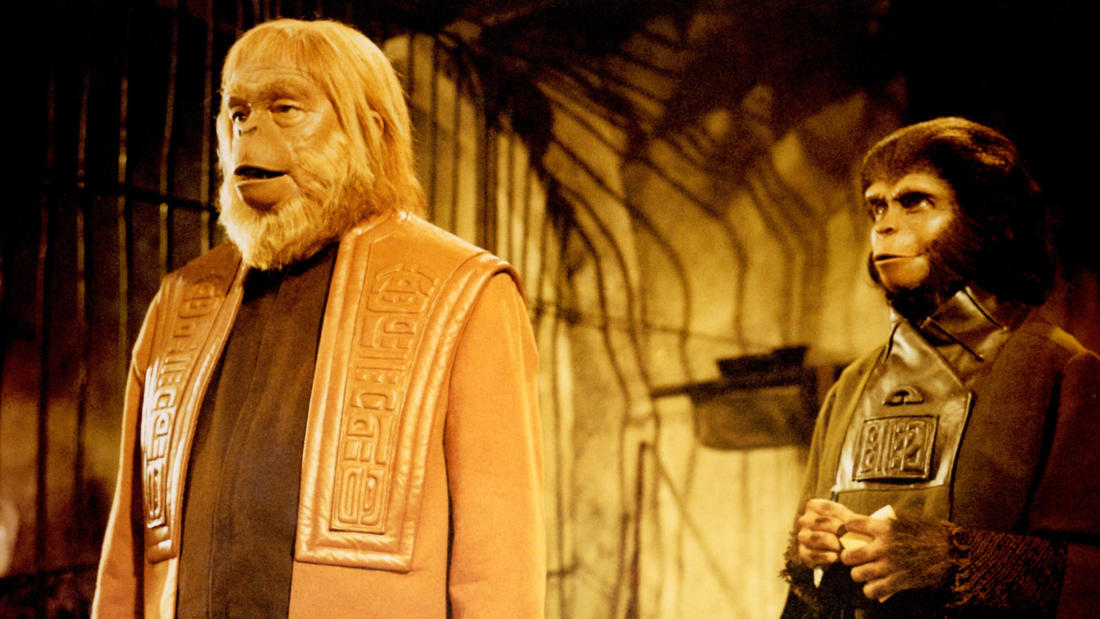
PLANET OF THE APES describes a world in which ape-looking creatures are the intelligent ones, and human-looking creatures can't even speak. Could that ever happen? Could that have happened, instead of the current, modern human world? How did we, humans, end up being the most intelligent creature on Earth? And... are we?
Presented At
Belcourt Theatre Nashville, TN
Film Synopsis
An astronaut crew crash lands on a planet in the distant future where intelligent talking apes are the dominant species, and humans are the oppressed and enslaved.
Charlton Heston is George Taylor, one of several astronauts on a long space mission whose ship propels them two millennia into the future, where they find themselves trapped on a planet ruled over by a race of highly intelligent apes. First billed as "an unusual and important motion picture event," Planet of the Apes has cemented its place in sci-fi history, redefining forever the notion of film-as-franchise.
About the Speaker
Suzana Herculano-Houzel is a biologist, neuroscientist and science writer and communicator at Vanderbilt University, where she studies brain evolution: what different brains are made of, how they came to be that way, and what difference does that make. Her research showed that human brains are just scaled-up primate brains in many ways, and what sets us apart from other animals is our sheer number of cortical neurons that endow the brain with cognitive flexibility, spurred 2 million years ago by a novel opportunity: the much-increased availability of energy from the novel technologies of processing food. She has been since 2006 a regular writer for the major Brazilian newspaper, Folha de São Paulo; is the author of several books, including The Human Advantage (MIT Press, 2016); and has two TED talks available at TED.com.